
A plain language summary looking at spesolimab treatment for the prevention of flares in people with generalized pustular psoriasis (GPP)
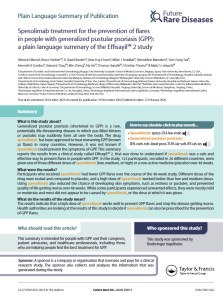 This Plain Language Summary of Publication article (PLSP) from Future Rare Diseases focuses on a rare, potentially life-threatening, disease called Generalized pustular psoriasis (shortened to GPP). People with the disease will have pus-filled blisters form all over the body. The Effisayil™ 2 study looked at whether an approved drug, known as spesolimab, could prevent the symptoms of GPP.
Visit the Future Medicine using the link to read the article.
This PLSP is based on an original article called ‘Efficacy and safety of subcutaneous spesolimab for the prevention of generalised pustular psoriasis flares (Effisayil 2): an international, multicentre, randomised, placebo-controlled trial’ and was published in The Lancet.
Visit The Lancet using the link to read the article.