Plain Language Summaries is part of Taylor & Francis Group.

  • Taylor & Francis
  • About us
  • Our journals
  • Our Digital Hubs

Taylor & Francis Group is a trading division of Informa that operates through various Informa legal entities including, but not limited to, Informa UK Limited, with the registered address at 5 Howick Place, London, SW1P 1WG, UK.

Taylor & Francis
logo
 
  • How to
  • FAQs
  • Publications
  • Advisory Panel
    • Plain Language Advisors
    • Scientific Content Advisors
  • Supporters
  • Blog
  • About us
  • Contact Us

Rare Diseases

25th Feb 2026

Plain language summary of the first etavopivat clinical study in sickle cell disease

25th Feb 2026

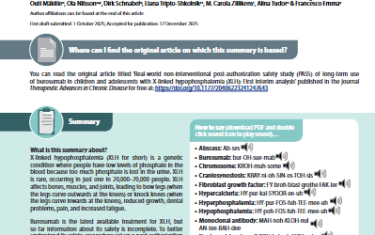
Plain language summary of clinical research examining burosumab safety in young patients with X-linked hypophosphatemia

22nd Jan 2026

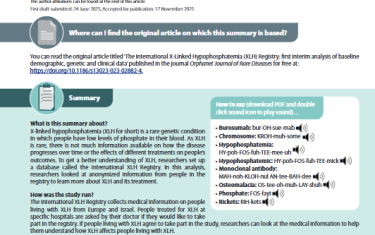
Early results from the global X-Linked Hypophosphatemia (XLH) Registry: a plain language summary

22nd Jan 2026

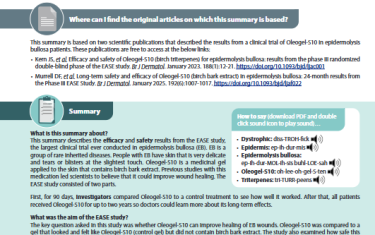
Plain language summary: EASE research on Oleogel-S10 birch bark extract in epidermolysis bullosa care

22nd Jan 2026

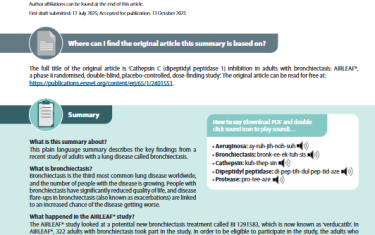
Plain language summary: AIRLEAF® trial findings on verducatib as an alternative therapy for bronchiectasis patients

20th Jan 2026

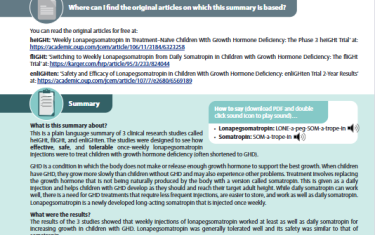
Plain language summary: clinical outcomes of lonapegsomatropin treatment for children lacking growth hormone

1st Dec 2025

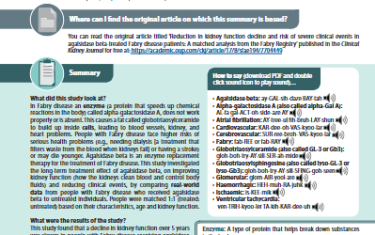
Kidney function in Fabry patients plain language summary: agalsidase beta treatment

28th Nov 2025

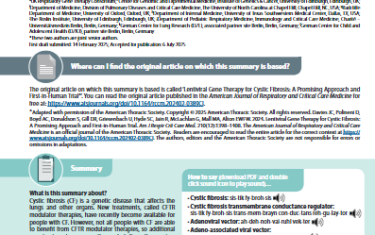
Cystic fibrosis plain language summary: exploring gene therapy possibilities

28th Nov 2025

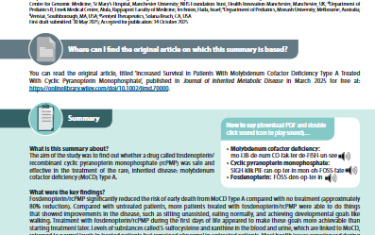
cPMP treatment for molybdenum cofactor deficiency Type A: a plain language summary

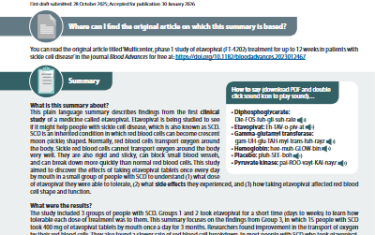
Screenshot of the first page of the PLSP article.
22nd Sep 2025

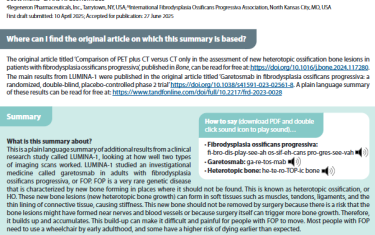
A plain language summary of the LUMINA-1 study: bone imaging in patients with fibrodysplasia ossificans progressiva

28th Aug 2025

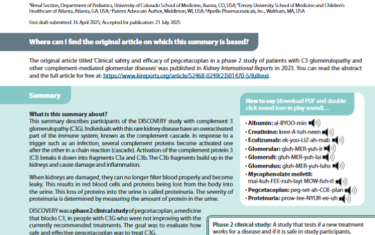
DISCOVERY study findings on pegcetacoplan for treating rare kidney diseases linked to complement system dysfunction: plain language summary

15th Aug 2025

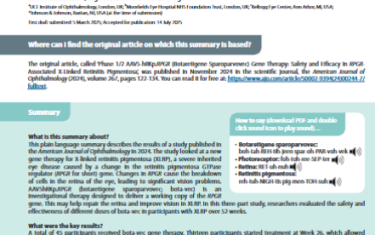
Early research on AAV5-hRKp.RPGR treatment for X-linked vision disorder linked to the RPGR gene: a plain language summary

25th Jun 2025

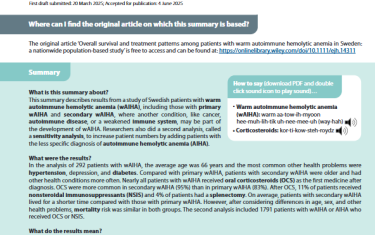
Plain language summary: examining survival results and therapy patterns among Swedish patients with warm autoimmune hemolytic anemia

24th Jun 2025

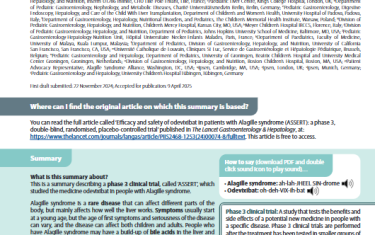
Plain language summary: how odevixibat treatment impacts patients with Alagille syndrome

27th May 2025

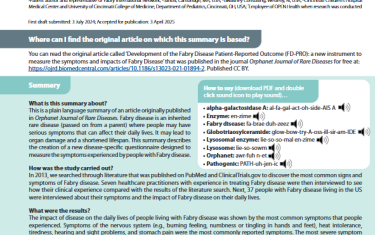
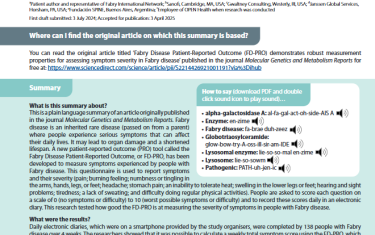
A new way to measure Fabry disease experiences from the patient perspective: plain language summary

23rd May 2025

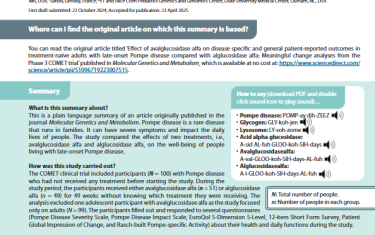
Plain language summary: how patients reported their experiences with avalglucosidase alfa and alglucosidase alfa in the COMET trial

13th May 2025

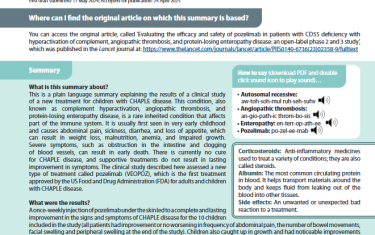
Understanding pozelimab’s impact on young CHAPLE disease patients : a plain language summary

13th May 2025

Measuring Fabry disease – a new patient-focused symptom questionnaire: a plain language summary

23rd Apr 2025

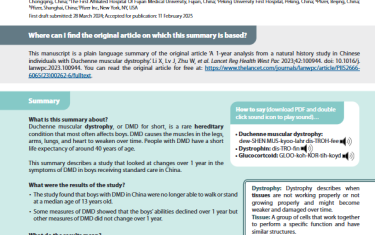
Plain language summary of a 1-Year natural history study of Duchenne muscular dystrophy in Chinese individuals

22nd Apr 2025

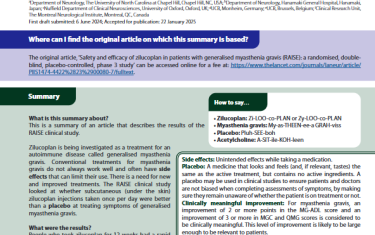
Daily zilucoplan self-injections eased symptoms in people with generalized myasthenia gravis: Plain Language Summary of the RAISE Study

22nd Apr 2025

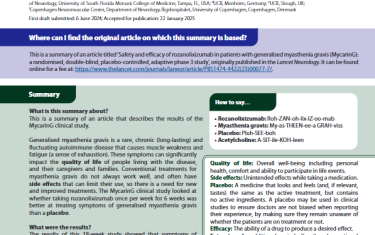
Plain language summary of the MycarinG study: Rozanolixizumab eased symptoms in people with generalized myasthenia gravis

21st Mar 2025

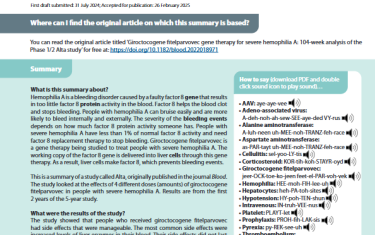
A plain language summary of the two-year results from a five-year study on giroctocogene fitelparvovec gene therapy for individuals with severe hemophilia A

13th Mar 2025

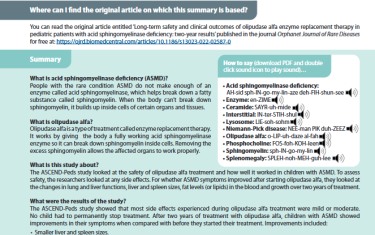
Plain language summary of the ASCEND-Peds study: Two-year results of olipudase alfa treatment in children with acid sphingomyelinase deficiency (ASMD)

24th Feb 2025

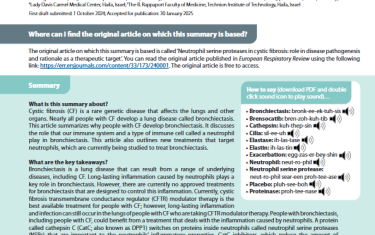
A plain language summary of bronchiectasis in cystic fibrosis and a potential new treatment with cathepsin C inhibitors

24th Jan 2025

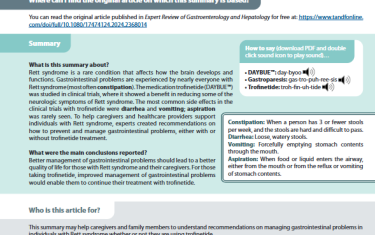
Managing gastrointestinal comorbidities with or without trofinetide use in Rett syndrome: a plain language summary

23rd Jan 2025

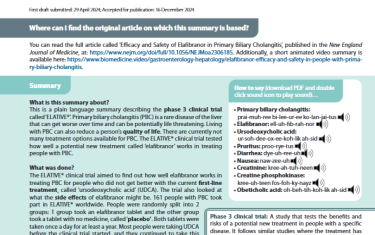
The effects of elafibranor in people with primary biliary cholangitis: a plain language summary

29th Nov 2024

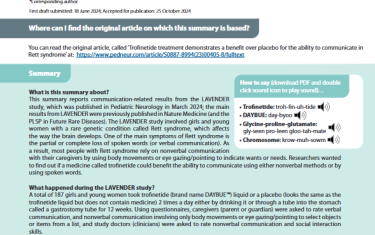
Trofinetide’s impact on communication in Rett syndrome: summary from the LAVENDER trial

8th Nov 2024

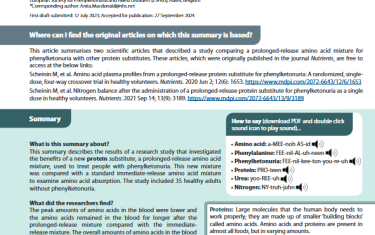
Prolonged-release protein substitute for phenylketonuria: a plain summary study in healthy adults

23rd Sep 2024

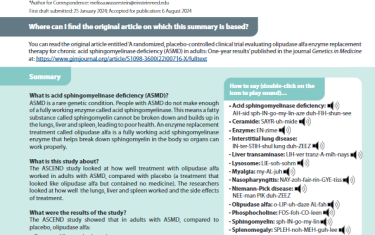
Plain language summary of the ASCEND study on one-year treatment outcomes with olipudase alfa in adults with acid sphingomyelinase deficiency (ASMD)

23rd Sep 2024

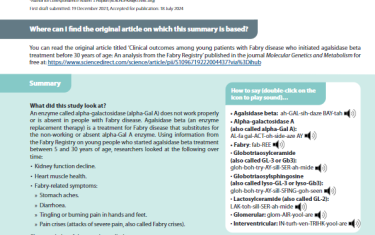
Plain language summary: examining treatment outcomes in individuals with Fabry disease who began agalsidase beta therapy before age 30

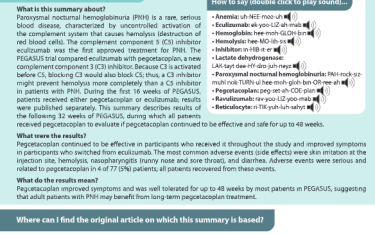
Paroxysmal nocturnal hemoglobinuria (PNH) is a rare, seriousblood disease, characterized by uncontrolled activation ofthe complement system that causes hemolysis (destruction ofred blood cells). The complement component 5 (C5) inhibitoreculizumab was the first approved treatment for PNH. ThePEGASUS trial compared eculizumab with pegcetacoplan, a newcomplement component 3 (C3) inhibitor. Because C3 is activatedbefore C5, blocking C3 would also block C5; thus, a C3 inhibitormight prevent hemolysis more completely than a C5 inhibitorin patients with PNH. During the first 16 weeks of PEGASUS,patients received either pegcetacoplan or eculizumab; resultswere published separately. This summary describes results ofthe following 32 weeks of PEGASUS, during which all patientsreceived pegcetacoplan to evaluate if pegcetacoplan continued to be effective and safe for up to 48 weeks
26th Jun 2024

PEGASUS study: A plain language summary looking treatment of paroxysmal nocturnal hemoglobinuria with pegcetacoplan for 48 weeks

Pegvaliase (PALYNZIQ®) is an enzyme injected under theskin to lower blood phenylalanine (Phe) levels in adults withphenylketonuria (PKU). PKU is a condition in which elevatedlevels of Phe in the blood and brain can affect the way a personthinks, feels and acts, and may impact their daily life. It iscommon for adults with PKU to experience anxiety. This can becaused by PKU itself as well as its management.
26th Jun 2024

A plain language summary: Management considerations for people with phenylketonuria and anxiety during the pegvaliase journey

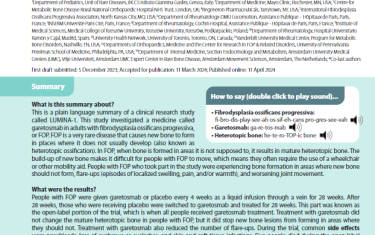
his is a plain language summary of a clinical research study called LUMINA-1. This study investigated a medicine called garetosmab in adults with fibrodysplasia ossificans progressiva, or FOP. FOP is a very rare disease that causes new bone to form in places where it does not usually develop (also known as heterotopic ossification). In FOP, when bone is formed in areas it is not supposed to, it results in mature heterotopic bone. The build-up of new bone makes it difficult for people with FOP to move, which means they often require the use of a wheelchair or other mobility aid. People with FOP who took part in the study were experiencing bone formation in areas where new bone should not form, flare-ups (episodes of localized swelling, pain, and/or warmth), and worsening joint movement
30th Apr 2024

LUMINA-1 study: A plain language summary looking at the effects of garetosmab in people with fibrodysplasia ossificans progressiva (FOP)

Pasireotide is a medication used to treat people with acromegaly or Cushing’s disease, both of which are hormonal disorders caused by a non-cancerous tumor (adenoma) in the pituitary gland. Because of the way pasireotide works to treat these conditions, sometimes blood sugar levels can increase during treatment, causing a side effect known as hyperglycemia. This is a summary about a study called B2219 (ClinicalTrials.gov ID: NCT02060383), which was designed specifically to look at which additional medication(s) work(s) best to reduce blood sugar levels (antihyperglycemic medication) for people who require treatment for hyperglycemia while receiving pasireotide
30th Apr 2024

A plain language summary looking at the management of high blood sugar (hyperglycemia) during pasireotide treatment

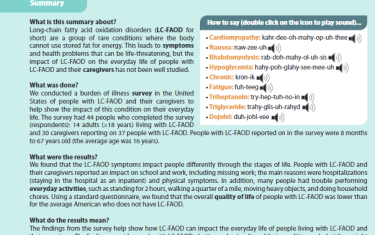
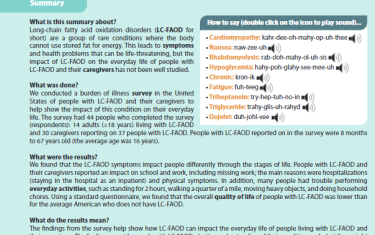
Long-chain fatty acid oxidation disorders (LC-FAOD for short) are a group of rare conditions where the body cannot use stored fat for energy. This leads to symptoms and health problems that can be life-threatening, but the impact of LC-FAOD on the everyday life of people with LC-FAOD and their caregivers has not been well studied.
30th Apr 2024

A plain language summary of a survey- the impact of long-chain fatty acid oxidation disorders (LC-FAOD)

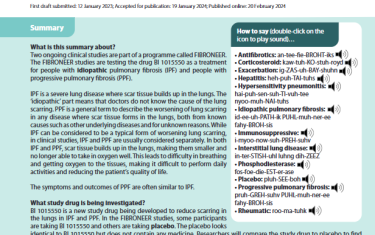
Two ongoing clinical studies are part of a programme called FIBRONEER. The FIBRONEER studies are testing the drug BI 1015550 as a treatment for people with idiopathic pulmonary fibrosis (IPF) and people with progressive pulmonary fibrosis (PPF).IPF is a severe lung disease where scar tissue builds up in the lungs. The ‘idiopathic’ part means that doctors do not know the cause of the lung scarring. PPF is a general term to describe the worsening of lung scarring in any disease where scar tissue forms in the lungs, both from known causes such as other underlying diseases and for unknown reasons. While IPF can be considered to be a typical form of worsening lung scarring, in clinical studies, IPF and PPF are usually considered separately. In both IPF and PPF, scar tissue builds up in the lungs, making them smaller and no longer able to take in oxygen well. This leads to difficulty in breathing and getting oxygen to the tissues, making it difficult to perform daily activities and reducing the patient’s quality of life.
27th Feb 2024

A plain language summary: BI 1015550 for idiopathic pulmonary fibrosis and progressive pulmonary fibrosis

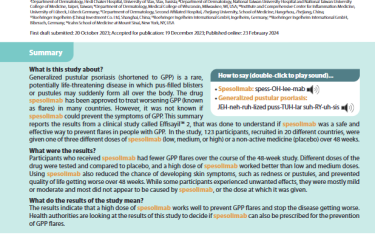
Generalized pustular psoriasis (shortened to GPP) is a rare, potentially life-threatening disease in which pus-filled blisters or pustules may suddenly form all over the body. The drug spesolimab has been approved to treat worsening GPP (known as flares) in many countries. However, it was not known if spesolimab could prevent the symptoms of GPP. This summary reports the results from a clinical study called Effisayil™ 2, that was done to understand if spesolimab was a safe and effective way to prevent flares in people with GPP. In the study, 123 participants, recruited in 20 different countries, were given one of three different doses of spesolimab (low, medium, or high) or a non-active medicine (placebo) over 48 weeks.
27th Feb 2024

A plain language summary looking at spesolimab treatment for the prevention of flares in people with generalized pustular psoriasis (GPP)

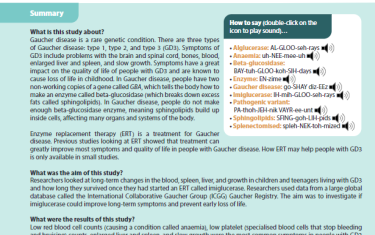
Gaucher disease is a rare genetic condition. There are three types of Gaucher disease: type 1, type 2, and type 3 (GD3). Symptoms of GD3 include problems with the brain and spinal cord, bones, blood, enlarged liver and spleen, and slow growth. Symptoms have a great impact on the quality of life of people with GD3 and are known to cause loss of life in childhood. In Gaucher disease, people have two non-working copies of a gene called GBA, which tells the body how to make an enzyme called beta-glucosidase (which breaks down excess fats called sphingolipids). In Gaucher disease, people do not make enough beta-glucosidase enzyme, meaning sphingolipids build up inside cells, affecting many organs and systems of the body.Enzyme replacement therapy (ERT) is a treatment for Gaucher disease. Previous studies looking at ERT showed that treatment can greatly improve most symptoms and quality of life in people with Gaucher disease. How ERT may help people with GD3 is only available in small studies
14th Feb 2024

Long-term benefits of enzyme replacement therapy in children and teenagers with Gaucher disease type 3- a plain language summary

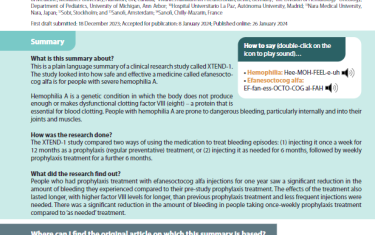
This is a plain language summary of a clinical research study called XTEND-1. The study looked into how safe and effective a medicine called efanesocto-cog alfa is for people with severe hemophilia A
2nd Feb 2024

Efanesoctocog alfa for patients with severe hemophilia A- a plain language summary

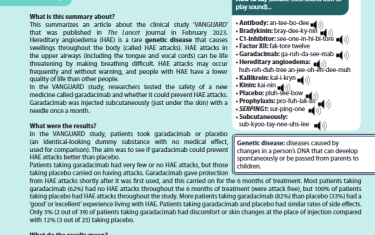
This summarizes an article about the clinical study ‘VANGUARD’ that was published in The Lancet journal in February 2023. Hereditary angioedema (HAE) is a rare genetic disease that causes swellings throughout the body (called HAE attacks). HAE attacks in the upper airways (including the tongue and vocal cords) can be life threatening by making breathing difficult. HAE attacks may occur frequently and without warning, and people with HAE have a lower quality of life than other people
22nd Jan 2024

The VANGUARD study: a plain language summary looking at garadacimab for the prevention of hereditary angioedema attacks:

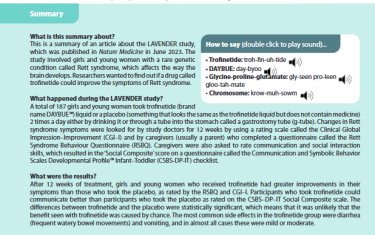
This is a summary of an article about the LAVENDER study, which was published in Nature Medicine in June 2023. The study involved girls and young women with a rare genetic condition called Rett syndrome, which affects the way the brain develops. Researchers wanted to find out if a drug called trofinetide could improve the symptoms of Rett syndrome.
22nd Jan 2024

The LAVENDER study: a plain language summary looking at trofinetide treatment for Rett syndrome

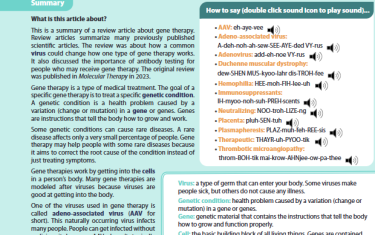
his is a summary of a review article about gene therapy. Review articles summarize many previously published scientific articles. The review was about how a common virus could change how one type of gene therapy works. It also discussed the importance of antibody testing for people who may receive gene therapy. The original review was published in Molecular Therapy in 2023
22nd Jan 2024

A plain language summary of the challenges and solutions for people with antibodies against AAV-based gene therapy

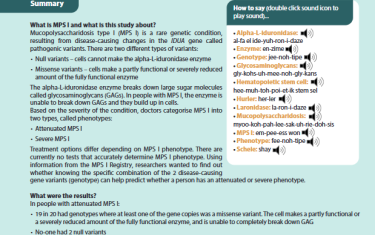
Mucopolysaccharidosis type I (MPS I) is a rare genetic condition, resulting from disease-causing changes in the IDUA gene called pathogenic variants. There are two different types of variants: • Null variants – cells cannot make the alpha-L-iduronidase enzyme • Missense variants – cells make a partly functional or severely reduced amount of the fully functional enzymeThe alpha-L-iduronidase enzyme breaks down large sugar molecules called glycosaminoglycans (GAGs). In people with MPS I, the enzyme is unable to break down GAGs and they build up in cells.Based on the severity of the condition, doctors categorise MPS I into two types, called phenotypes:• Attenuated MPS I • Severe MPS ITreatment options differ depending on MPS I phenotype. There are currently no tests that accurately determine MPS I phenotype. Using information from the MPS I Registry, researchers wanted to find out whether knowing the specific combination of the 2 disease-causing gene variants (genotype) can help predict whether a person has an attenuated or severe phenotype
17th Jan 2024

Looking at whether genetic testing can help doctors diagnose the severity of MPS I- a plain language summary

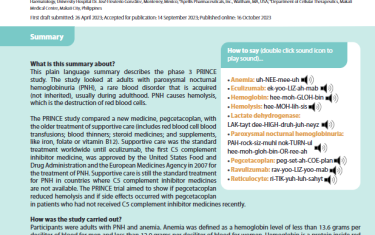
This plain language summary describes the phase 3 PRINCE study. The study looked at adults with paroxysmal nocturnal hemoglobinuria (PNH), a rare blood disorder that is acquired (not inherited), usually during adulthood. PNH causes hemolysis, which is the destruction of red blood cells.
20th Nov 2023

A plain language summary comparing pegcetacoplan with supportive care for 26 weeks in participants with paroxysmal nocturnal hemoglobinuria

This is a summary of an article about people with primary biliary cholangitis (PBC) who also suffer from itch. PBC is a disease that affects the liver; itching is common in PBC and can dramatically reduce a person’s quality of life.
16th Nov 2023

A plain language summary on the impact of itch on the quality of life in people with primary biliary cholangitis

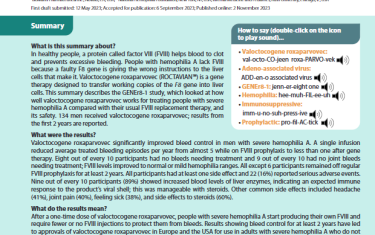
In healthy people, a protein called factor VIII (FVIII) helps blood to clot and prevents excessive bleeding. People with hemophilia A lack FVIII because a faulty F8 gene is giving the wrong instructions to the liver cells that make it. Valoctocogene roxaparvovec (ROCTAVIAN™) is a gene therapy designed to transfer working copies of the F8 gene into liver cells. This summary describes the GENEr8-1 study, which looked at how well valoctocogene roxaparvovec works for treating people with severe hemophilia A compared with their usual FVIII replacement therapy, and its safety. 134 men received valoctocogene roxaparvovec; results from the first 2 years are reported.
14th Nov 2023

Plain Language Summary of Publication article: the GENEr8-1 study of valoctocogene roxaparvovec gene therapy for hemophilia A

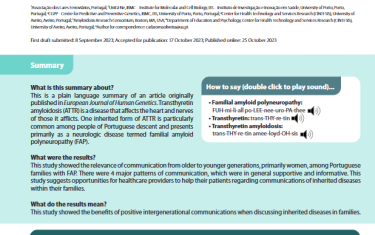
This is a plain language summary of an article originally published in European Journal of Human Genetics. Transthyretin amyloidosis (ATTR) is a disease that affects the heart and nerves of those it afflicts. One inherited form of ATTR is particularly common among people of Portuguese descent and presents primarily as a neurologic disease termed familial amyloid polyneuropathy (FAP)
2nd Nov 2023

A plain language summary of the intergenerational promotion of health behaviours in Portuguese families affected by familial amyloid polyneuropathy

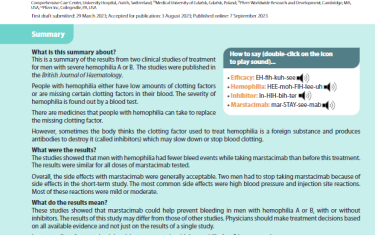
This is a summary of the results from two clinical studies of treatment for men with severe hemophilia A or B. The studies were published in the British Journal of Haematology. People with hemophilia either have low amounts of clotting factors or are missing certain clotting factors in their blood. The severity of hemophilia is found out by a blood test. There are medicines that people with hemophilia can take to replace the missing clotting factor. However, sometimes the body thinks the clotting factor used to treat hemophilia is a foreign substance and produces antibodies to destroy it (called inhibitors) which may slow down or stop blood clotting
22nd Sep 2023

A plain language summary looking at marstacimab treatment for people with severe hemophilia A or B

1 2 Next »

Copyright © 2026 · Plain Language Summaries · Terms and conditions · Privacy policy · Cookie policy