Plain Language Summaries is part of Taylor & Francis Group.

  • Taylor & Francis
  • About us
  • Our journals
  • Our Digital Hubs

Taylor & Francis Group is a trading division of Informa that operates through various Informa legal entities including, but not limited to, Informa UK Limited, with the registered address at 5 Howick Place, London, SW1P 1WG, UK.

Taylor & Francis
logo
 
  • How to
  • FAQs
  • Publications
  • Advisory Panel
    • Plain Language Advisors
    • Scientific Content Advisors
  • Supporters
  • Blog
  • About us
  • Contact Us

rare disease

25th Feb 2026

Plain language summary of clinical research examining burosumab safety in young patients with X-linked hypophosphatemia

22nd Jan 2026

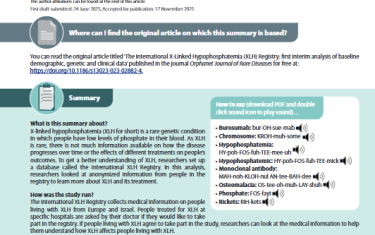
Early results from the global X-Linked Hypophosphatemia (XLH) Registry: a plain language summary

13th May 2025

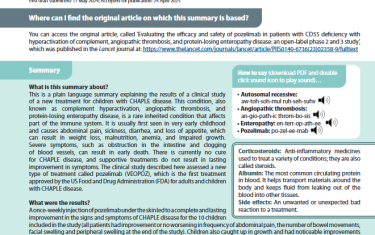
Understanding pozelimab’s impact on young CHAPLE disease patients : a plain language summary

19th Mar 2025

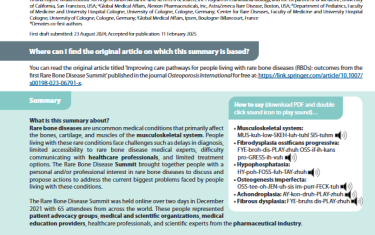
Plain language summary of key findings from the first Rare Bone Disease Summit: challenges and priority action

13th Mar 2025

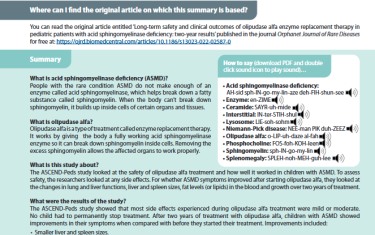
Plain language summary of the ASCEND-Peds study: Two-year results of olipudase alfa treatment in children with acid sphingomyelinase deficiency (ASMD)

23rd Jan 2025

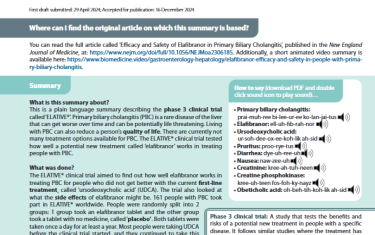
The effects of elafibranor in people with primary biliary cholangitis: a plain language summary

23rd Sep 2024

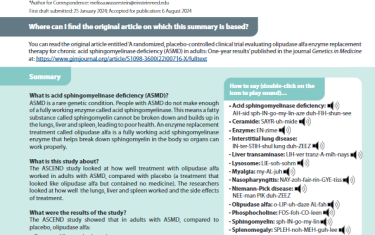
Plain language summary of the ASCEND study on one-year treatment outcomes with olipudase alfa in adults with acid sphingomyelinase deficiency (ASMD)

16th Sep 2024

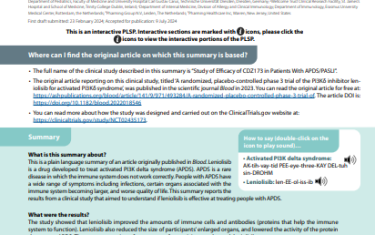
Plain language summary of the phase 3 study on Leniolisib treatment for people with activated PI3K delta syndrome (APDS)

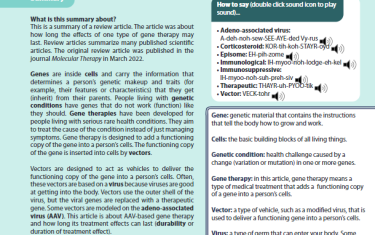
This is a summary of a review article. The article was about how long the effects of one type of gene therapy may last. Review articles summarize many published scientific articles. The original review article was published in the journal Molecular Therapy in March 2022
30th Apr 2024

A plain language summary looking at how the effects of gene therapy based on adeno-associated virus last

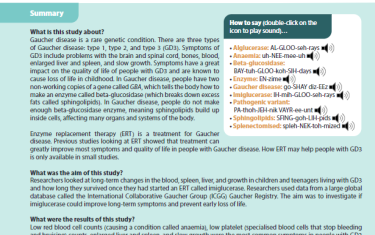
Gaucher disease is a rare genetic condition. There are three types of Gaucher disease: type 1, type 2, and type 3 (GD3). Symptoms of GD3 include problems with the brain and spinal cord, bones, blood, enlarged liver and spleen, and slow growth. Symptoms have a great impact on the quality of life of people with GD3 and are known to cause loss of life in childhood. In Gaucher disease, people have two non-working copies of a gene called GBA, which tells the body how to make an enzyme called beta-glucosidase (which breaks down excess fats called sphingolipids). In Gaucher disease, people do not make enough beta-glucosidase enzyme, meaning sphingolipids build up inside cells, affecting many organs and systems of the body.Enzyme replacement therapy (ERT) is a treatment for Gaucher disease. Previous studies looking at ERT showed that treatment can greatly improve most symptoms and quality of life in people with Gaucher disease. How ERT may help people with GD3 is only available in small studies
14th Feb 2024

Long-term benefits of enzyme replacement therapy in children and teenagers with Gaucher disease type 3- a plain language summary

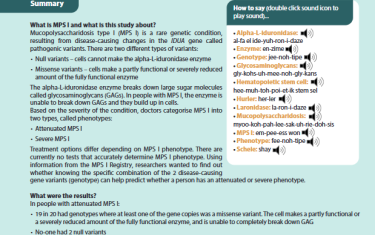
Mucopolysaccharidosis type I (MPS I) is a rare genetic condition, resulting from disease-causing changes in the IDUA gene called pathogenic variants. There are two different types of variants: • Null variants – cells cannot make the alpha-L-iduronidase enzyme • Missense variants – cells make a partly functional or severely reduced amount of the fully functional enzymeThe alpha-L-iduronidase enzyme breaks down large sugar molecules called glycosaminoglycans (GAGs). In people with MPS I, the enzyme is unable to break down GAGs and they build up in cells.Based on the severity of the condition, doctors categorise MPS I into two types, called phenotypes:• Attenuated MPS I • Severe MPS ITreatment options differ depending on MPS I phenotype. There are currently no tests that accurately determine MPS I phenotype. Using information from the MPS I Registry, researchers wanted to find out whether knowing the specific combination of the 2 disease-causing gene variants (genotype) can help predict whether a person has an attenuated or severe phenotype
17th Jan 2024

Looking at whether genetic testing can help doctors diagnose the severity of MPS I- a plain language summary

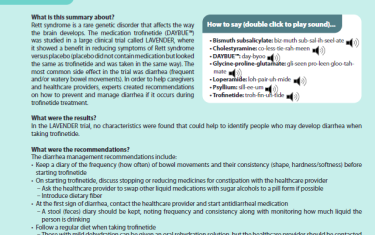
Rett syndrome is a rare genetic disorder that affects the way the brain develops. The medication trofinetide (DAYBUE™) was studied in a large clinical trial called LAVENDER, where it showed a benefit in reducing symptoms of Rett syndrome versus placebo (placebo did not contain medication but looked the same as trofinetide and was taken in the same way). The most common side effect in the trial was diarrhea (frequent and/or watery bowel movements). In order to help caregivers and healthcare providers, experts created recommendations on how to prevent and manage diarrhea if it occurs during trofinetide treatment
31st Jul 2023

Plain Language Summary: recommendations for managing diarrhea caused by trofinetide use in individuals with Rett Syndrome

31st Jan 2023

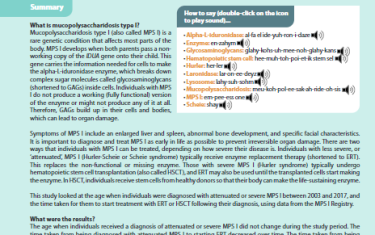
Plain language summary of a study looking at the age at diagnosis and time to start of treatment in individuals with mucopolysaccharidosis type I (MPS I)

Copyright © 2026 · Plain Language Summaries · Terms and conditions · Privacy policy · Cookie policy