Plain Language Summaries is part of Taylor & Francis Group.

  • Taylor & Francis
  • About us
  • Our journals
  • Our Digital Hubs

Taylor & Francis Group is a trading division of Informa that operates through various Informa legal entities including, but not limited to, Informa UK Limited, with the registered address at 5 Howick Place, London, SW1P 1WG, UK.

Taylor & Francis
logo
 
  • How to
  • FAQs
  • Publications
  • Advisory Panel
    • Plain Language Advisors
    • Scientific Content Advisors
  • Supporters
  • Blog
  • About us
  • Contact Us

Brain and nerves

20th Jan 2026

Plain language summary: One-year outcomes of vagus nerve stimulation therapy for Japanese patients with hard-to-treat epilepsy

28th Nov 2025

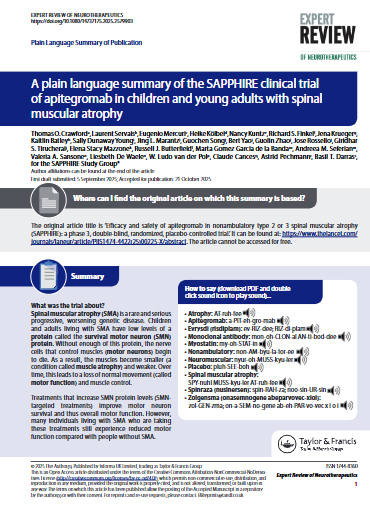
Apitegromab in young spinal muscular atrophy patients: SAPPHIRE study plain language summary

26th Nov 2025

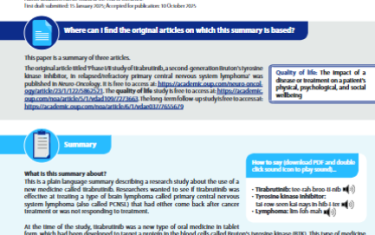
Plain language summary: tirabrutinib for relapsed brain lymphoma treatment

28th Oct 2025

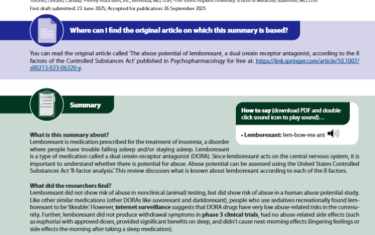
Plain language summary: safety review of lemborexant for insomnia treatment

28th Oct 2025

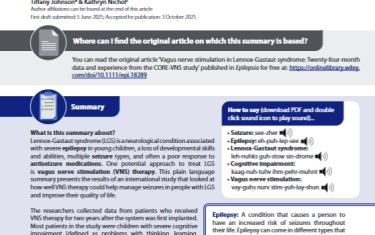
Vagus nerve stimulation therapy for severe childhood epilepsy over 2 years: plain language summary

23rd Oct 2025

Recent insights on vagus nerve stimulation’s role in epilepsy: a plain language summary

28th Aug 2025

Plain language summary: using matched patient data to evaluate omaveloxolone against the natural history of Friedreich ataxia

15th Aug 2025

Survival rates for children with treatment-resistant epilepsy: comparing medication, vagus nerve stimulation, and surgical interventions: a plain language summary

18th Jul 2025

Plain language summary: research findings on eptinezumab for migraine prevention in patients who didn’t respond to previous treatments

17th Jul 2025

Plain language summary: research on taking rimegepant by mouth to reduce migraine frequency

20th May 2025

Daily solriamfetol for obstructive sleep apnea patients with daytime sleepiness improved memory and attention performance: a plain language summary

13th May 2025

Shared decision-making for multiple sclerosis using the MS-SUPPORT tool: a plain language summary

13th Mar 2025

Plain language summary of mortality rates in patients with Parkinson’s disease psychosis treated with pimavanserin or other atypical antipsychotics

11th Feb 2025

A plain language summary of a study on the experiences of people with relapsing-remitting multiple sclerosis: key symptoms, impacts, and ways to improve evaluation

21st Jan 2025

Plain language summary: the impact of headache-related stigma and quality of life in adults with frequent headaches/migraines and high medication use

21st Jan 2025

Plain language summary: healthcare resource utilization among Medicare-covered patients with Parkinson’s disease psychosis treated with pimavanserin or other atypical antipsychotics

21st Jan 2025

Enhancing quality of life in people with relapsing multiple sclerosis treated with cladribine tablets: a plain language summary of the 2-year CLARIFY-MS study

10th Dec 2024

Effects of Serdexmethylphenidate/dexmethylphenidate on growth and sleep in children and adolescents with ADHD: a plain language summary

29th Nov 2024

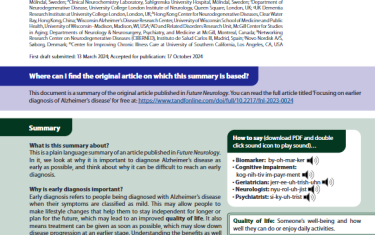
Focusing on earlier diagnosis of Alzheimer’s disease: a plain language summary

24th Sep 2024

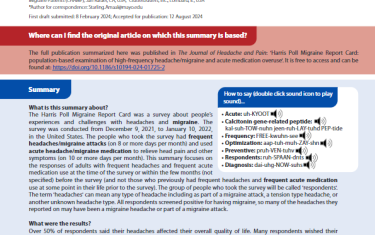
A plain language summary of a population-based survey on Americans with frequent migraines and their use of acute medications

12th Aug 2024

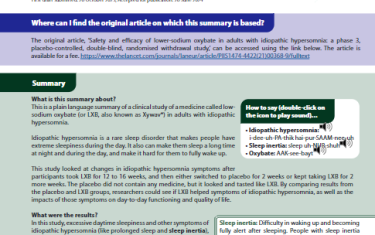
Low-sodium oxybate enhances symptoms in adults with idiopathic hypersomnia

12th Aug 2024

Multiple sclerosis patients co-design a tool to measure physical functioning and its impact on daily life: a plain language summary

Pegvaliase (PALYNZIQ®) is an enzyme injected under theskin to lower blood phenylalanine (Phe) levels in adults withphenylketonuria (PKU). PKU is a condition in which elevatedlevels of Phe in the blood and brain can affect the way a personthinks, feels and acts, and may impact their daily life. It iscommon for adults with PKU to experience anxiety. This can becaused by PKU itself as well as its management.
26th Jun 2024

A plain language summary: Management considerations for people with phenylketonuria and anxiety during the pegvaliase journey

This is a plain language summary of an article published inthe journal Brain. People with Alzheimer’s disease may receivetreatments that target amyloid-β – a protein in the brain thatis one of the key characteristics of Alzheimer’s disease whenit is present in higher levels than normal. This article is aboutamyloid-related imaging abnormalities (ARIA), which can beadverse events for people with Alzheimer’s disease receivingantibody treatments targeting amyloid-β (known as anti–amyloid-β antibody treatments). This article also discusses waysto identify and manage ARIA.
26th Jun 2024

A plain language summary discussing amyloid-related imaging abnormalities (ARIA) and their characteristics

Lennox-Gastaut syndrome (LGS) and Dravet syndrome (DS) are rare forms of epilepsy that start in childhood and cause life-long disability. People with LGS and DS experience many seizure types and nonseizure-related problems with cognition (ability to think and understand), learning, behavior and communication. People with LGS and DS depend on caregivers to assist with daily activities. Although many medications are available to treat seizures associated with LGS and DS, the effect on nonseizure outcomes is unclear. A highly purified (defined as a substance that has undergone a special process to remove impurities) oral (by mouth) solution of cannabidiol (CBD; Epidiolex®) from plants is approved by the United States (US) Food and Drug Administration (FDA) for the treatment of seizures associated with LGS, DS and tuberous sclerosis complex in people who are at least 1 year old. In clinical studies, treatment with CBD reduced the number of seizures
30th Apr 2024

A plain language summary of a caregiver study: Nonseizure-and seizure-related benefits of cannabidiol treatment

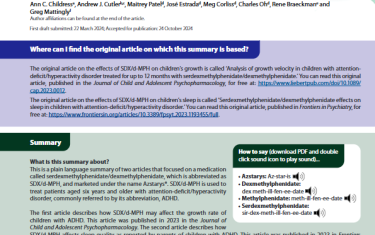
This is a plain language summary of 2 articles published in the Journal of Child and Adolescent Psychopharmacology. It describes a medication called serdexmethylphenidate/dexmethylphenidate, or SDX/d-MPH for short. SDX/d-MPH is marketed under the name Azstarys®. It is in capsule form taken by mouth once a day in the morning and meant for treating patients aged 6 years and older with attention-deficit/hyperactivity disorder, commonly referred to as ADHD. This summary focuses on studies that were done in children and adolescents aged 6 to 12 years with ADHD. The study results showed how SDX/d-MPH reduced the symptoms of ADHD, how fast the medication began to work and for how long it worked in the study patients, as well as the medication’s safety during 1 year of treatment
30th Apr 2024

SDX/d-MPH capsules for children and adolescents with ADHD: A plain language summary

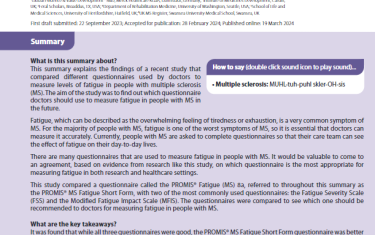
This summary explains the findings of a recent study that compared different questionnaires used by doctors to measure levels of fatigue in people with multiple sclerosis (MS). The aim of the study was to find out which questionnaire doctors should use to measure fatigue in people with MS in the future.Fatigue, which can be described as the overwhelming feeling of tiredness or exhaustion, is a very common symptom of MS. For the majority of people with MS, fatigue is one of the worst symptoms of MS, so it is essential that doctors can measure it accurately. Currently, people with MS are asked to complete questionnaires so that their care team can see the effect of fatigue on their day-to-day lives. There are many questionnaires that are used to measure fatigue in people with MS. It would be valuable to come to an agreement, based on evidence from research like this study, on which questionnaire is the most appropriate for measuring fatigue in both research and healthcare settings.This study compared a questionnaire called the PROMIS® Fatigue (MS) 8a, referred to throughout this summary as the PROMIS® MS Fatigue Short Form, with two of the most commonly used questionnaires: the Fatigue Severity Scale (FSS) and the Modified Fatigue Impact Scale (MFIS). The questionnaires were compared to see which one should be recommended to doctors for measuring fatigue in people with MS.
30th Apr 2024

Which questionnaire should doctors use to measure fatigue in people with multiple sclerosis (MS)? A plain language summary

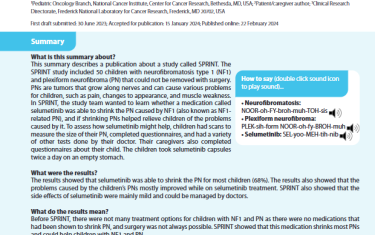
This summary describes a publication about a study called SPRINT. The SPRINT study included 50 children with neurofibromatosis type 1 (NF1) and plexiform neurofibroma (PN) that could not be removed with surgery. PNs are tumors that grow along nerves and can cause various problems for children, such as pain, changes to appearance, and muscle weakness. In SPRINT, the study team wanted to learn whether a medication called selumetinib was able to shrink the PN caused by NF1 (also known as NF1-related PN), and if shrinking PNs helped relieve children of the problems caused by it. To assess how selumetinib might help, children had scans to measure the size of their PN, completed questionnaires, and had a variety of other tests done by their doctor. Their caregivers also completed questionnaires about their child. The children took selumetinib capsules twice a day on an empty stomach.
27th Feb 2024

A plain language summary of the SPRINT study: selumetinib for children with neurofibromatosis type 1 and plexiform neurofibromas

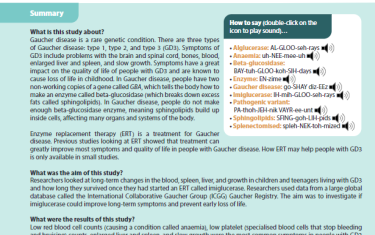
Gaucher disease is a rare genetic condition. There are three types of Gaucher disease: type 1, type 2, and type 3 (GD3). Symptoms of GD3 include problems with the brain and spinal cord, bones, blood, enlarged liver and spleen, and slow growth. Symptoms have a great impact on the quality of life of people with GD3 and are known to cause loss of life in childhood. In Gaucher disease, people have two non-working copies of a gene called GBA, which tells the body how to make an enzyme called beta-glucosidase (which breaks down excess fats called sphingolipids). In Gaucher disease, people do not make enough beta-glucosidase enzyme, meaning sphingolipids build up inside cells, affecting many organs and systems of the body.Enzyme replacement therapy (ERT) is a treatment for Gaucher disease. Previous studies looking at ERT showed that treatment can greatly improve most symptoms and quality of life in people with Gaucher disease. How ERT may help people with GD3 is only available in small studies
14th Feb 2024

Long-term benefits of enzyme replacement therapy in children and teenagers with Gaucher disease type 3- a plain language summary

This plain language summary describes a clinical study that looked at the effects of a medicine called low-sodium oxybate (or LXB; XYWAV® [calcium, magnesium, potassium, and sodium oxybates]) in adults with narcolepsy. Narcolepsy is a rare brain disorder that can make people feel extremely sleepy during the day or have symptoms like cataplexy, which is sudden and temporary muscle weakness. This study compared changes in symptoms between people who either switched to placebo or continued with LXB after they had been taking LXB for 14 weeks. The placebo looked and tasted like LXB but did not have the active ingredient. This allowed researchers to see if LXB improved symptoms like cataplexy and extreme daytime sleepiness
25th Jan 2024

Improved symptoms of narcolepsy with cataplexy in adults who used low-sodium oxybate- a plain language summary

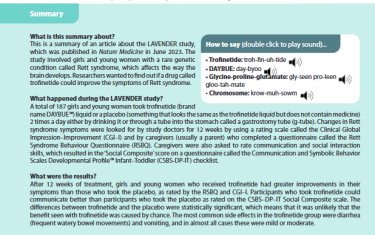
This is a summary of an article about the LAVENDER study, which was published in Nature Medicine in June 2023. The study involved girls and young women with a rare genetic condition called Rett syndrome, which affects the way the brain develops. Researchers wanted to find out if a drug called trofinetide could improve the symptoms of Rett syndrome.
22nd Jan 2024

The LAVENDER study: a plain language summary looking at trofinetide treatment for Rett syndrome

This is a summary of an article originally published in the journal Postgraduate Medicine.Lemborexant is a type of medication called a dual orexin receptor antagonist (often abbreviated to DORA) that is approved for treating people with insomnia, a sleep disorder in which people have trouble falling asleep, staying asleep or both. Two studies, one called SUNRISE-1 (Study 304), which lasted one month, and SUNRISE-2 (Study 303), which lasted 12 months, looked at the effects of lemborexant on sleep compared to placebo in people with insomnia. People with insomnia often experience fatigue (or tiredness) during the daytime, which affects their daily lives and health, and often have other conditions which can also cause fatigue. This summary reports an analysis that looked at whether lemborexant improves fatigue during the daytime as well as nighttime symptoms of insomnia in all participants and in participants with clinically significant fatigue before treatment.
18th Jan 2024

Insomnia-related fatigue: a plain language summary looking at the effects of lemborexant

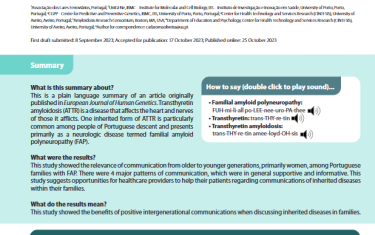
This is a plain language summary of an article originally published in European Journal of Human Genetics. Transthyretin amyloidosis (ATTR) is a disease that affects the heart and nerves of those it afflicts. One inherited form of ATTR is particularly common among people of Portuguese descent and presents primarily as a neurologic disease termed familial amyloid polyneuropathy (FAP)
2nd Nov 2023

A plain language summary of the intergenerational promotion of health behaviours in Portuguese families affected by familial amyloid polyneuropathy

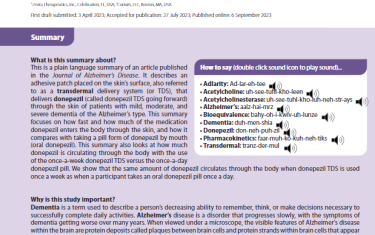
This is a plain language summary of an article published in the Journal of Alzheimer’s Disease. It describes an adhesive patch placed on the skin’s surface, also referred to as a transdermal delivery system (or TDS), that delivers donepezil (called donepezil TDS going forward) through the skin of patients with mild, moderate, and severe dementia of the Alzheimer’s type. This summary focuses on how fast and how much of the medication donepezil enters the body through the skin, and how it compares with taking a pill form of donepezil by mouth (oral donepezil). This summary also looks at how much donepezil is circulating through the body with the use of the once-a-week donepezil TDS versus the once-a-day donepezil pill. We show that the same amount of donepezil circulates through the body when donepezil TDS is used once a week as when a participant takes an oral donepezil pill once a day.
14th Sep 2023

A plain language summary describing once-a-week donepezil transdermal system’s bioequivalence to oral donepezil in healthy volunteers

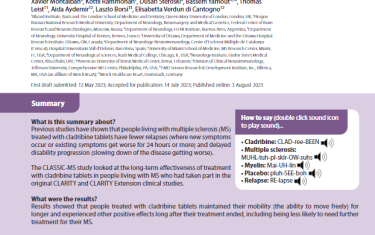
Previous studies have shown that people living with multiple sclerosis (MS) treated with cladribine tablets have fewer relapses (where new symptoms occur or existing symptoms get worse for 24 hours or more) and delayed disability progression (slowing down of the disease getting worse). The CLASSIC-MS study looked at the long-term effectiveness of treatment with cladribine tablets in people living with MS who had taken part in the original CLARITY and CLARITY Extension clinical studies
10th Aug 2023

Plain language summary: the CLASSIC-MS study assessing the long-term effectiveness of cladribine tablets in people living with relapsing multiple sclerosis

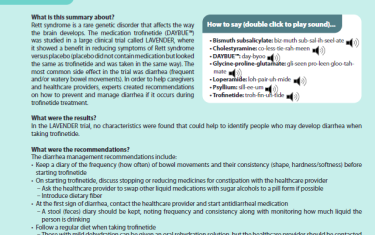
Rett syndrome is a rare genetic disorder that affects the way the brain develops. The medication trofinetide (DAYBUE™) was studied in a large clinical trial called LAVENDER, where it showed a benefit in reducing symptoms of Rett syndrome versus placebo (placebo did not contain medication but looked the same as trofinetide and was taken in the same way). The most common side effect in the trial was diarrhea (frequent and/or watery bowel movements). In order to help caregivers and healthcare providers, experts created recommendations on how to prevent and manage diarrhea if it occurs during trofinetide treatment
31st Jul 2023

Plain Language Summary: recommendations for managing diarrhea caused by trofinetide use in individuals with Rett Syndrome

This is a summary of three articles describing preventive treatment of migraine in participants with a diagnosis of both chronic migraine and medication-overuse headache in a study called PROMISE-2 (PRevention Of Migraine via Intravenous ALD403 Safety and Efficacy–2). People living with chronic migraine and medication-overuse headache have one of the most disabling, costly, and difficult-to-treat headache disorders
28th Jun 2023

Plain Language Summary: treatment with eptinezumab for migraine prevention in people with chronic migraine and medication-overuse headache

This summary explains the findings from a recent investigation that combined the results of over 1000 people from three clinical studies to understand the safety of evobrutinib.Evobrutinib is an oral medication (taken by mouth), being researched as a potential treatment for multiple sclerosis (MS). This medication was also investigated in rheumatoid arthritis (RA) and systemic lupus erythematosus (SLE).Over 1000 people have taken evobrutinib as part of three separate phase 2 clinical studies. These studies looked at how much of the drug should be taken, how safe the drug is, and how well it might work for treating a certain medical condition.
27th Jun 2023

Plain Language Summary: what can clinical studies tell us about evobrutinib, a potential treatment for multiple sclerosis

Patient registries contain anonymous data from people who share the same medical condition. The MSBase registry contains information from over 80,000 people living with multiple sclerosis (MS) across 41 countries.Using information from the MSBase registry, the GLIMPSE (Generating Learnings In MultiPle SclErosis) study looked atreal-life outcomes in 3475 people living with MS who were treated with cladribine tablets (Mavenclad®) compared with other oral treatments.
8th Jun 2023

Plain Language Summary: Results from the MSBase registry looking at the effectiveness of cladribine tablets for multiple sclerosis

This plain language summary describes the main results from two similar research studies, “Study 1” and “Study 2”, which evaluated the use of a medication called daridorexant in patients with chronic insomnia disorder. These two studies were phase 3 clinical trials, which compared different doses of daridorexant to an inactive pill called a placebo, which looked and tasted similar to the daridorexant pill but did not contain daridorexant or any other active ingredient.
23rd May 2023

Plain Language Summary: the results from two phase 3 studies on the efficacy and safety of daridorexant in patients with chronic insomnia disorder:

12th Apr 2023

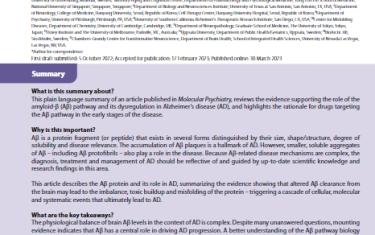
Plain Language Summary: Amyloid-β pathway in Alzheimer’s disease

1st Mar 2023

A plain language summary of the impact of vaccines against flu and chickenpox in people with multiple sclerosis treated with cladribine tablets

27th Feb 2023

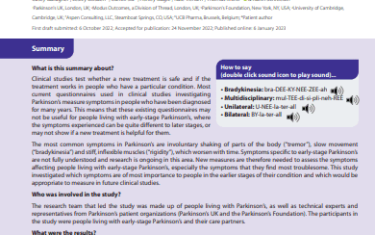
Plain language summary: what symptoms should be measured in clinical studies for early-stage Parkinson’s?

25th Oct 2022

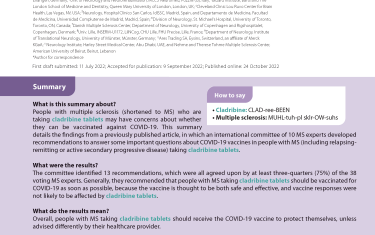
Expert opinion on COVID-19 vaccines and cladribine tablets in MS: A plain language summary

15th Sep 2022

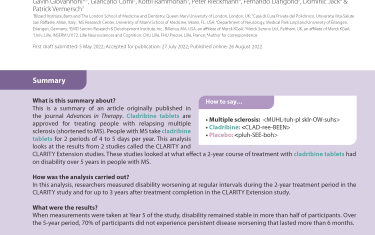
Disease stability over five years in people with multiple sclerosis treated with cladribine tablets: a plain language summary

15th Sep 2022

Relapses in people with multiple sclerosis treated with cladribine tablets followed for up to 5 years: a plain language summary

22nd Aug 2022

The effect of cladribine tablets in people with more active multiple sclerosis: a plain language summary

26th Jul 2022

The AT(N) system for describing biological changes in Alzheimer’s disease: a plain language summary

1 2 Next »

Copyright © 2026 · Plain Language Summaries · Terms and conditions · Privacy policy · Cookie policy